
Reflecting on my West African Dance course, I would describe embodied learning as freeing your body and enhancing your mindset through your physical movements. You feel at peace with yourself while dancing, and you are not stressed about mastering the movements or if somebody next to you is doing something wrong. Embodied learning is about being at one with your movement and letting energy flow through your body.
Many times, before entering the dance studio, I’d be going through a challenging day. Oftentimes, I’d feel caged within myself, but after dancing, I felt at a deeper state of tranquility.
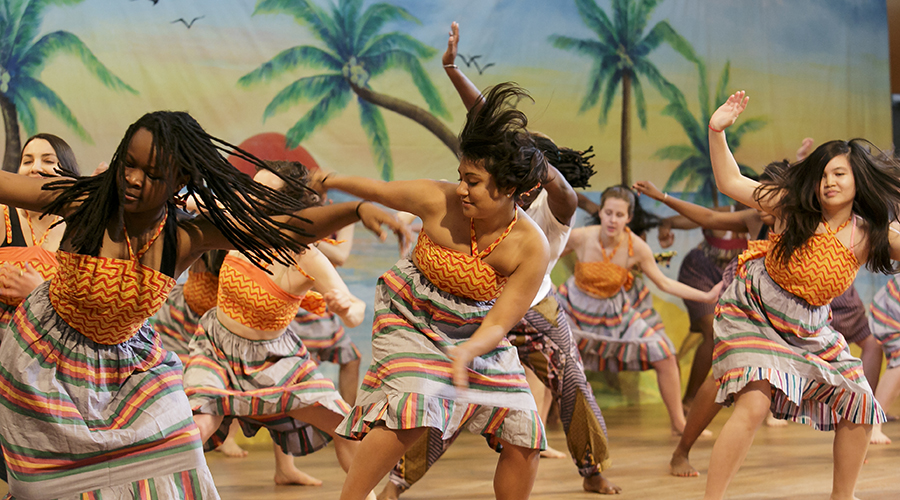
Even though one of the dances, Gahu, is tiring, I felt fulfilled after finishing it.
After you calm down and your heart stops beating a million miles per minute. You start to realize that it was fun, energetic, and actually rejuvenating.
West African dance has been a way for me to strengthen my mind and physical coordination, which took time to develop over the semester. Once this coordination strengthens, it is easier to enjoy dancing.
As a STEM student, West African dance gave me that escape. It opened embodied experiences that allow me to exercise not just my brain but my body to its fullest potential.
Taking STEM classes can drain a lot of my mental energy, so I found myself rebuilding my spiritual and emotional strength through the
physical activity of dance.
Applying Your Learning to Life Outside of Class
One thing that sets this class apart from the STEM classes is Professor Iddi’s teaching style. Professor Iddi wanted all his students to succeed and embody the movements he introduced to us. We would countlessly rehearse the dances, repeat the songs, and build a community through hard work and spirit.
Since then, I’ve been able to apply this to my STEM courses, continuously reworking on areas of weakness and not being afraid to learn and grow with others.
